What IVF means.
In vitro fertilization involves collecting eggs, fertilizing them in the laboratory and observing the resulting embryos before a possible transfer to the uterus. Your specialist may discuss IVF for several different reasons, including tubal problems, endometriosis, male-factor infertility or previous treatment history.
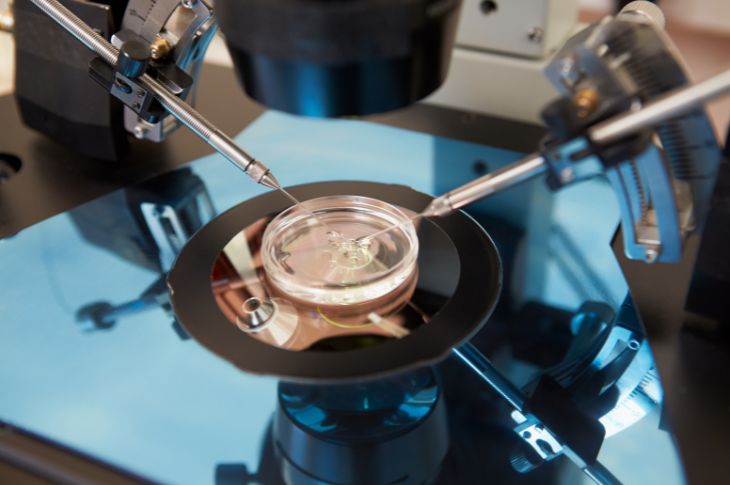
ICSI is a fertilization technique used within IVF: an embryologist injects a single sperm into a mature egg. The choice between conventional fertilization and ICSI is a clinical and laboratory decision.
The treatment, in human terms.
An assessment comes first. When appropriate, prescribed medication stimulates the ovaries, and ultrasound monitoring helps the team follow the response. Egg retrieval and sperm collection are then coordinated with the laboratory.
Embryologists monitor fertilization and development over the following days. Your physician discusses whether a transfer should take place in that cycle or whether embryos should be frozen for a later transfer. Not every egg fertilizes, and not every embryo reaches a stage suitable for transfer.
Before you travel.
Share previous reports and treatment records through the process agreed with the clinical team. Some investigations or monitoring may be possible close to home, but only after the treating physician confirms what is suitable and who will provide it.
Do not begin or change medication based on website information. Your protocol, prescriptions and travel dates must be agreed with your physician.
Making room for your own timeline.
Retrieval, embryo testing and transfer do not always belong to a single visit. A frozen-transfer plan can mean a later return to Brazil. Your itinerary needs to reflect the treatment actually proposed, with flexibility if your response changes.
Questions worth asking.
What is the reason for recommending IVF or ICSI in my case? What would make you change the plan? How will you keep me informed about embryo development? What follow-up will I need when I return home?
Your physician should discuss expected benefits, risks—including ovarian hyperstimulation and procedure-related complications—alternatives and the possibility that a cycle may not lead to a pregnancy.